Leading product design to create a unified platform where patients, families, and providers easily share and understand health records.
What is Primary Record?
Primary Record is a health data platform designed to help families and caregivers organize, track, and share medical history in one unified place. I worked as a solo design consultant with the early-stage founding team to transform complex, multi-source medical records into intuitive, human-centered interfaces that empower everyday users and streamline provider communication.
What We Needed to Achieve
I worked closely with Product and Technical Leadership to transform a rough technical concept into an intuitive, user-centric product experience. I audited the existing codebase to identify key usability gaps, redesigned core workflows around real caregiver needs, and established scalable visual patterns. Throughout the process, I led the end-to-end design for new features, ensuring technical requirements were met while delivering a clear, empowering experience for families.
Results
I evolved a complex, data-heavy foundation into a streamlined, user-first experience, establishing design systems and interactive prototypes that accelerated feature delivery and improved data comprehension.
The results directly strengthened user engagement and platform trust. The updated interface simplified record-sharing workflows, drastically reduced onboarding friction, and laid the foundation for scalable provider integrations.
Solo Design Resource
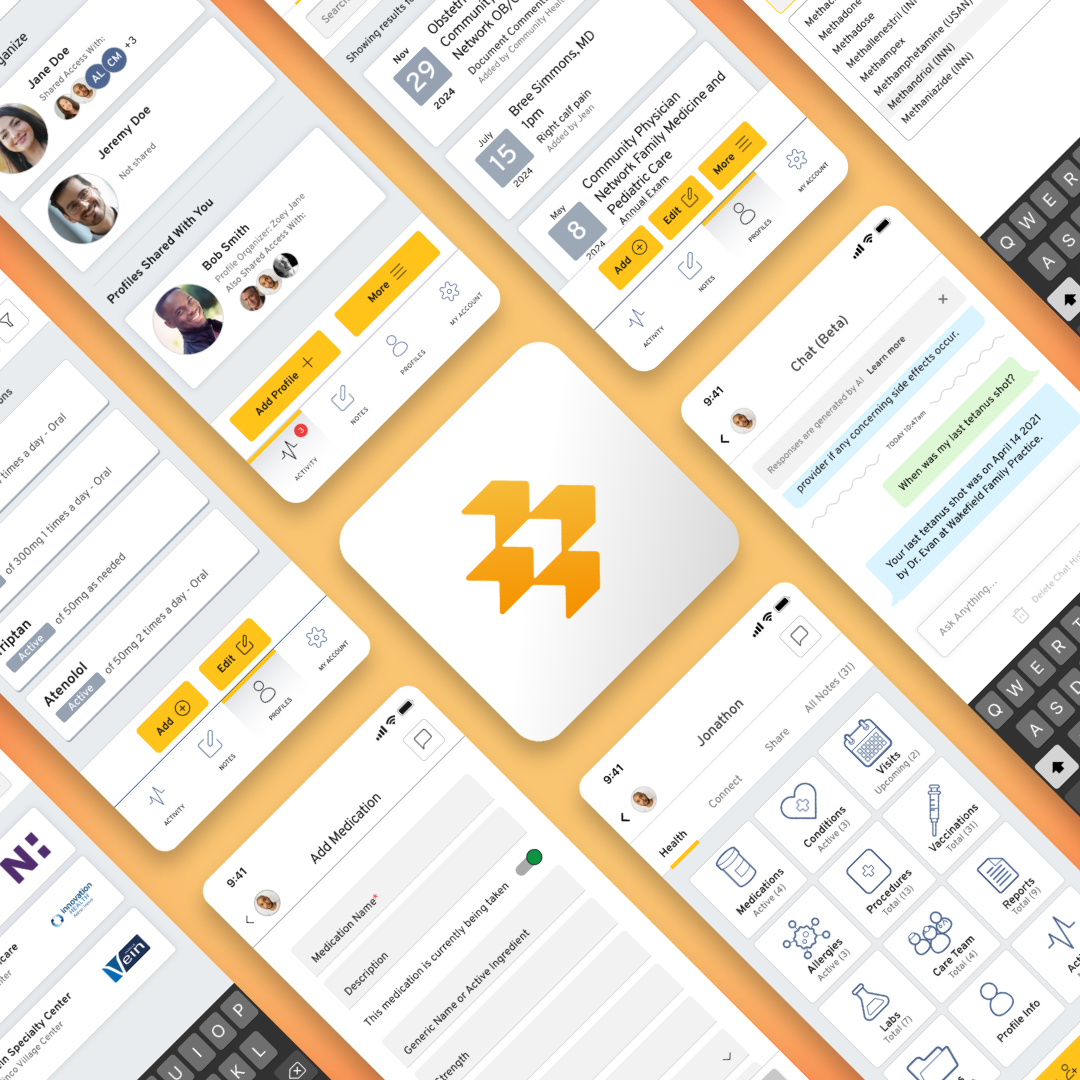
I partnered directly with Primary Record’s founders and engineering team as their sole product designer to transform an early-stage proof of concept into a market-ready experience.
When I joined, the team had built a rough functional POC with basic core features, but recognized the experience required significant refinement before launching to consumers. I audited the existing codebase to identify UX friction points, streamlined content hierarchy, consolidated layout patterns, and led design efforts on all new features.
Designing with Emotional Awareness for an Intuitive Experience
Cross-Functional Collaboration
Partnered closely with founders, product managers, and engineering leads to align product requirements with technical feasibility, ensuring rapid iteration without compromising design quality.
PoC Evaluation & Navigation Architecture
Audited the initial proof-of-concept build to identify recurring UX friction points and layout inconsistencies. Designed a streamlined navigation architecture that reduced visual complexity and created a logical, repeatable flow across key health management features.
Empathy-Led User Research
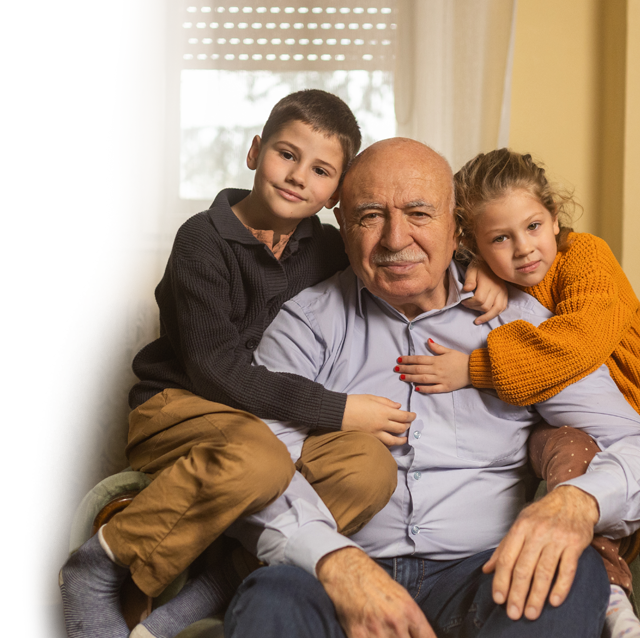
Engaged directly with caregivers, family members, and physicians to understand their real-world workflows. Focused on designing supportive, low-stress interactions that respected users facing high-anxiety medical situations.
End-to-End Design & Execution
Led product design from initial discovery through final delivery, owning information architecture, wireframes, interactive prototypes, and production UI specs for both mobile and desktop platforms.
Understanding User Intent and Designing Intuitive Pathways
Context-Aware Navigation System
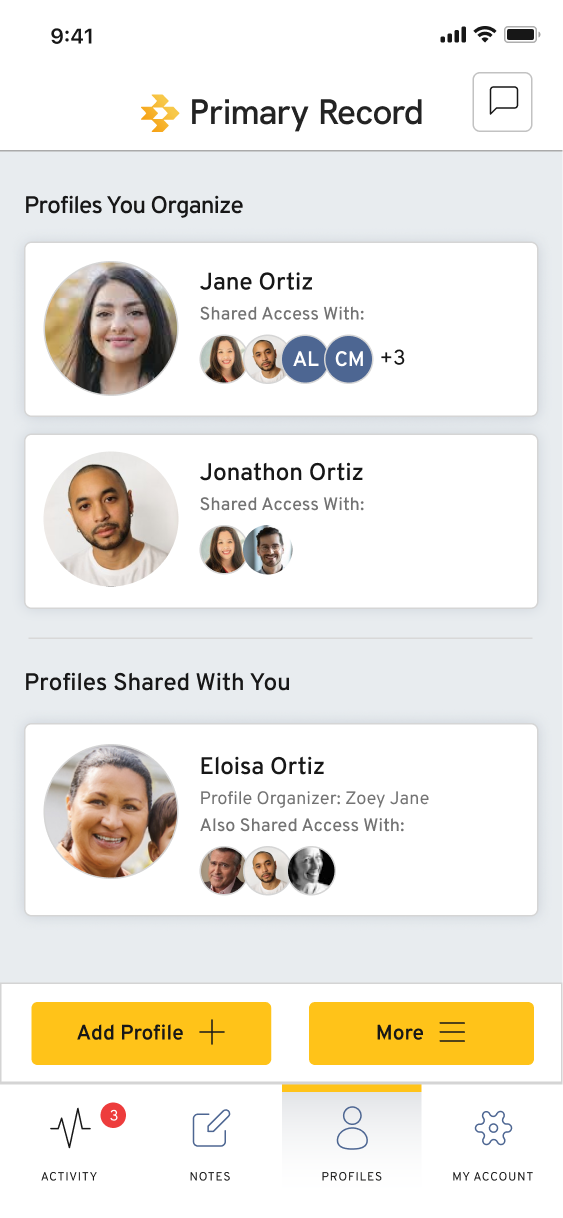
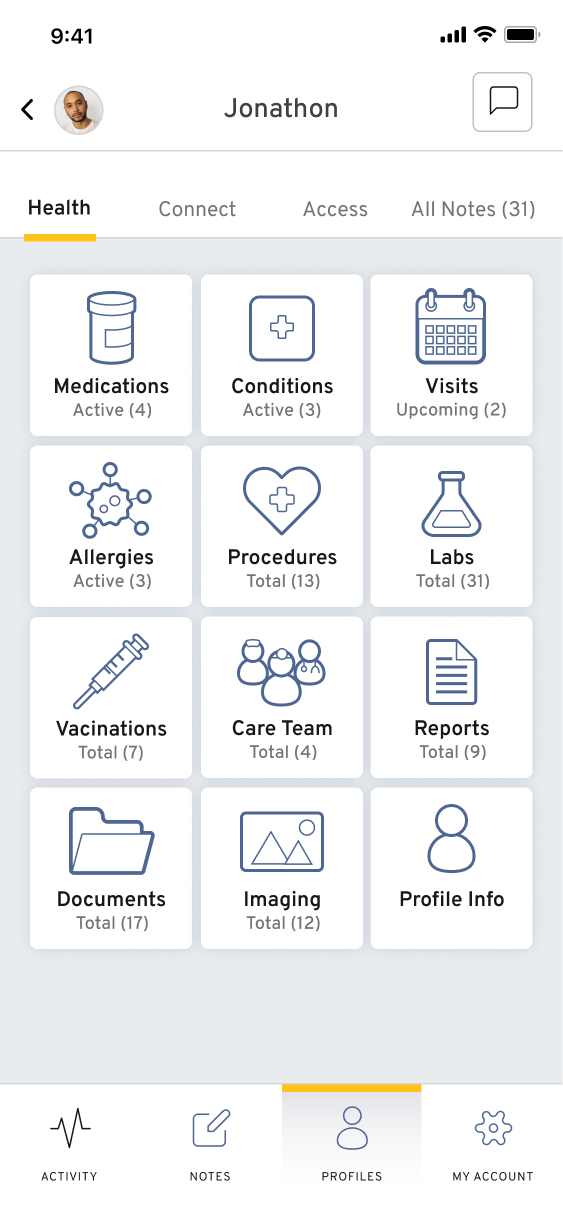
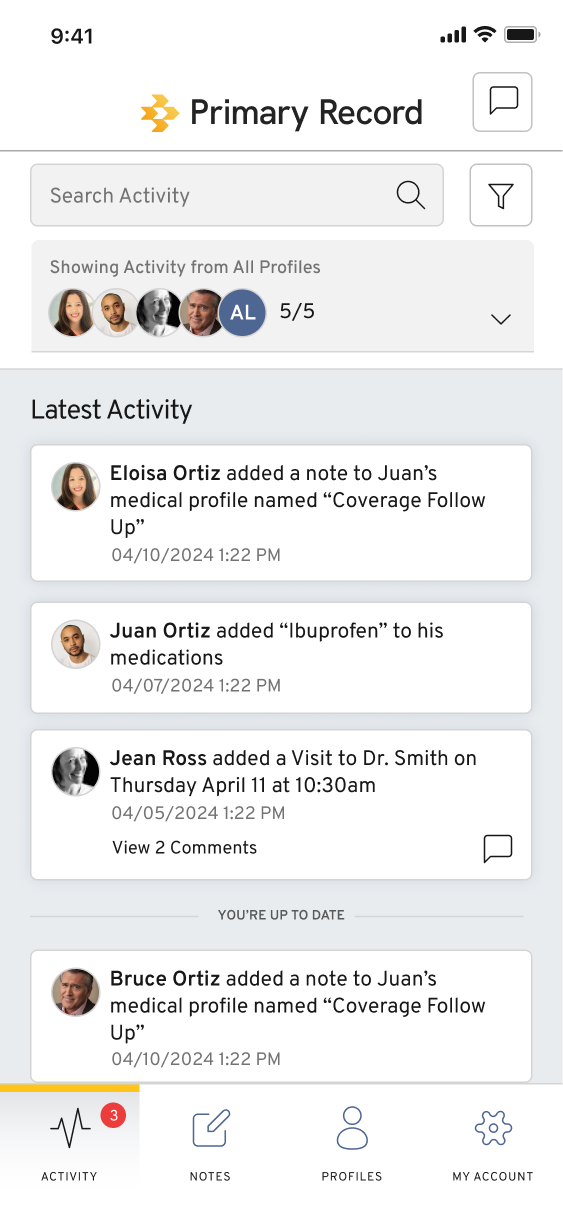
Replaced rigid top-level menus with an intuitive, profile-centric navigation structure. Users can seamlessly toggle between family members, view isolated health timelines, or access emergency contacts without losing their place in the app.
Mapping User Mental Models
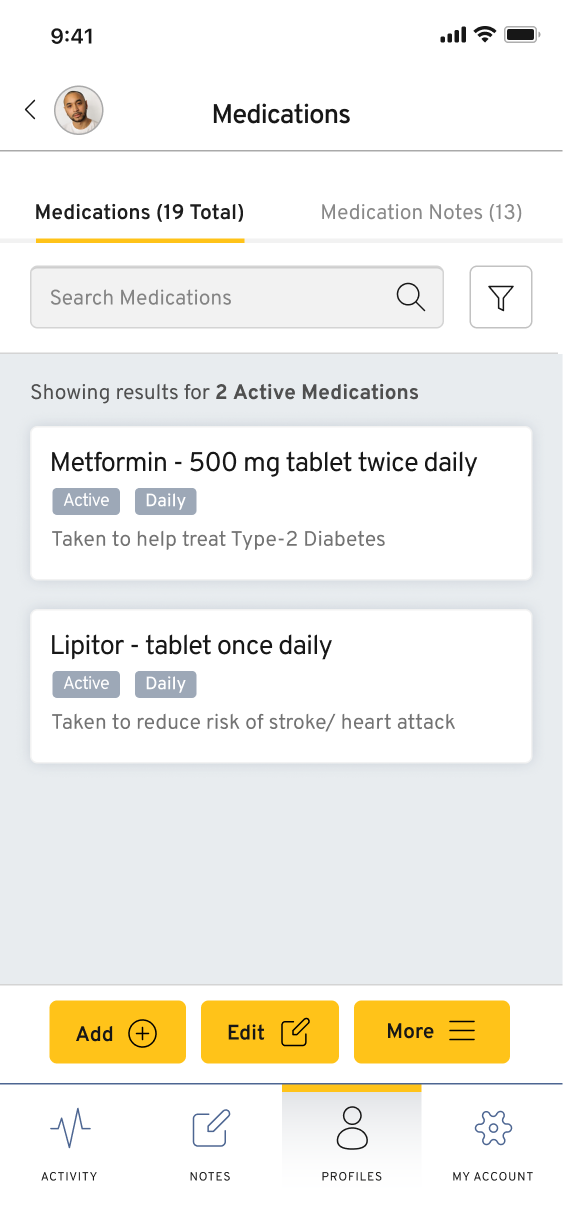
Analyzed how caregivers naturally search for critical medical data during high-stress moments. Structured page flows around user intent rather than underlying database schemas, ensuring health histories, medication logs, and daily tracking features were reachable in minimal taps.
Surfacing Critical Health Insights with Ease and Clarity
Instant Contextual Retrieval
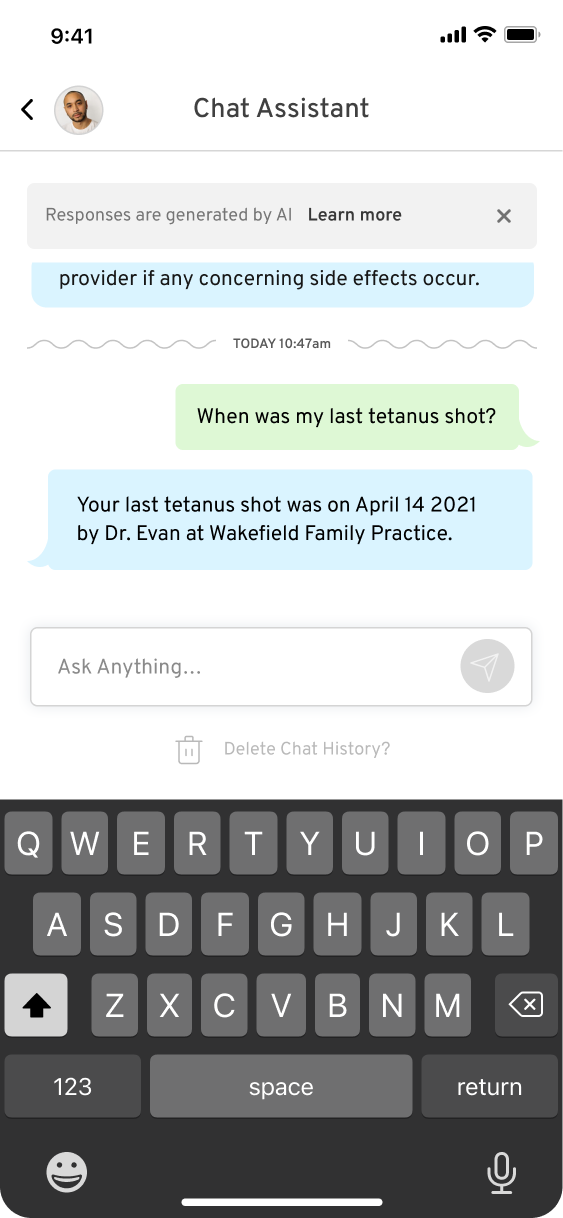
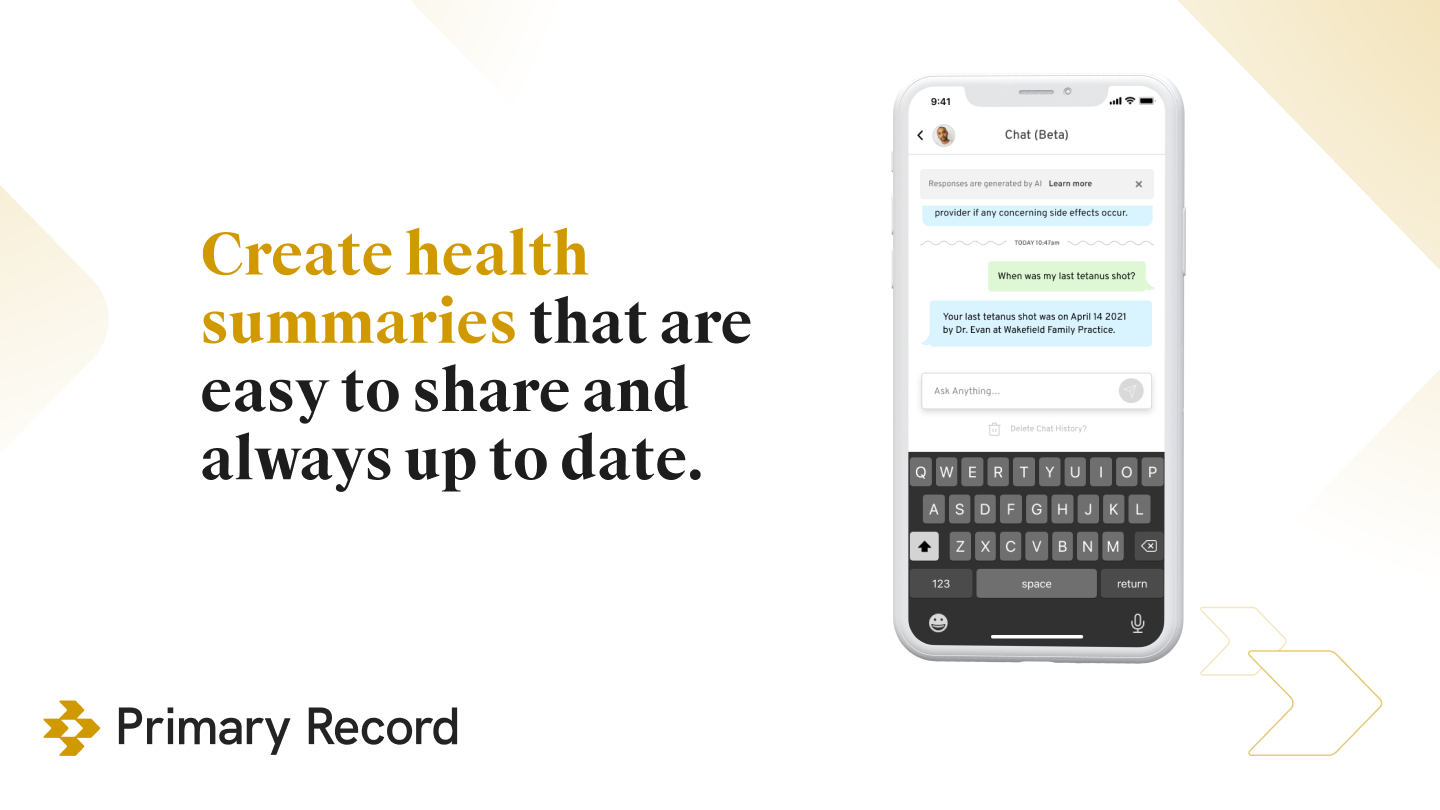
Integrated a natural-language AI chat assistant tailored for high-stakes environments like doctor visits or emergency room admissions. Caregivers can type or speak plain-language queries to surface specific dosages, past lab results, or historical symptom timelines in seconds.
Fast, Effortless Access to Key Health Details
Designed a simple and intuitive interface that gets caregivers straight to the answers they need. Instead of scrolling through years of scattered records during a quick doctor visit, the platform pinpoints exact medical history details and highlights critical health information right away.
Connecting Health Data and Unifying Family Care
Unified Record Sync & Personalization
Streamlined the process of connecting multiple Electronic Health Record (EHR) systems and patient portals into a single feed. Caregivers can import raw clinical data, edit entry details, and enrich records with personal notes, photos, or document attachments to build a complete picture of a loved one’s health story.
Controlled Family Collaboration
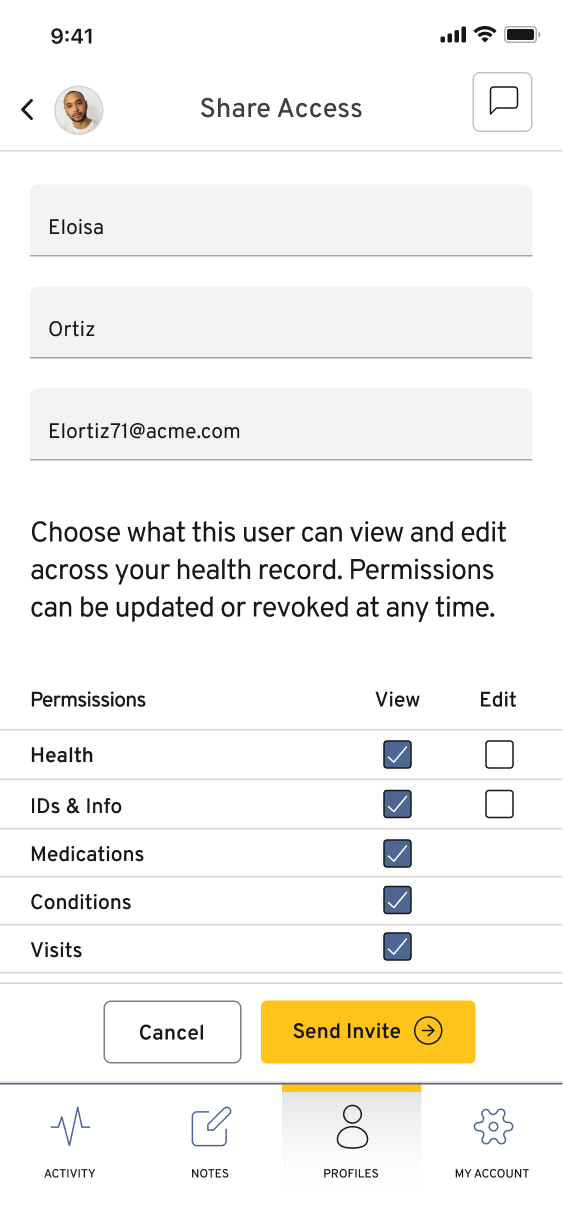
Replaced chaotic email threads, group chats, and endless phone tag with secure, permission-based sharing tools. Primary Record allows users to invite family members and external caregivers to collaborate while maintaining granular control over exactly which health profiles and records each person can access.
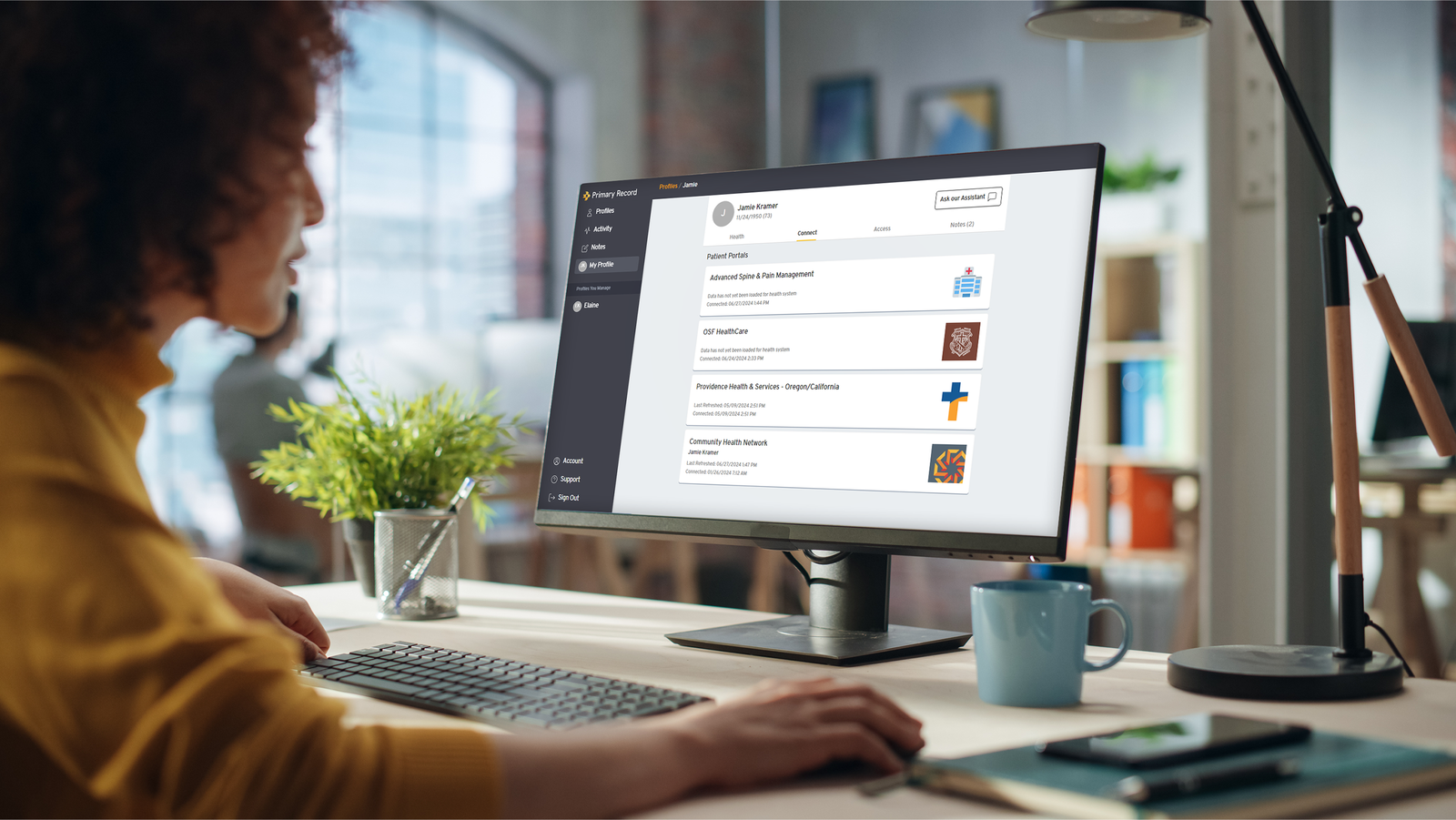
Empowering Care Organizations
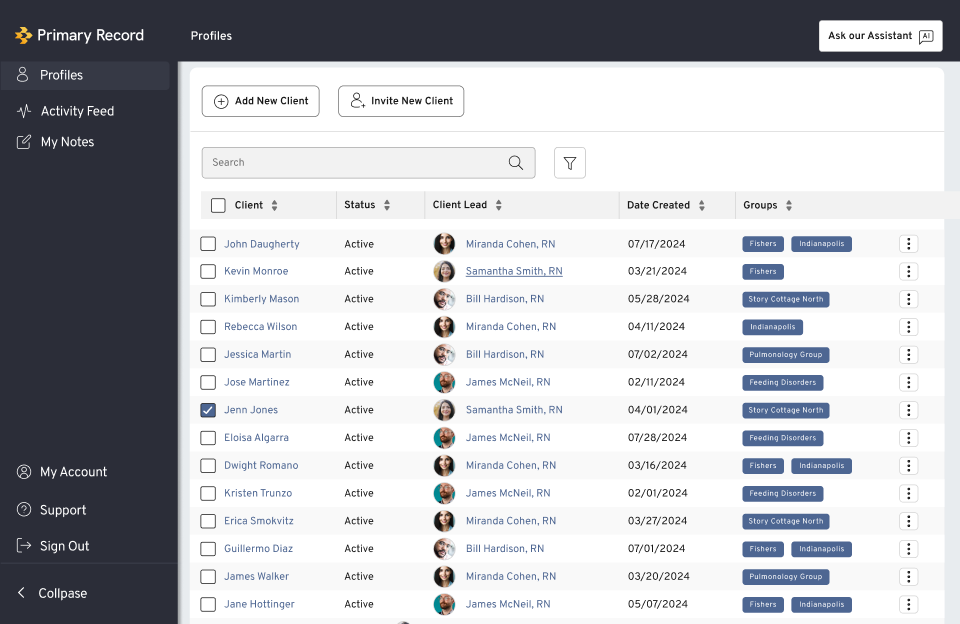
To expand Primary Record from a consumer app into an enterprise B2B offering, we designed a dedicated web-based desktop admin portal for healthcare advocates, employer benefits partners, and care management organizations.
Because this was the initial MVP of the business portal, timing was critical to meet partner rollout deadlines and secure early market traction. The goal was to build a clean, highly functional hub that allowed clinical leads and care navigators to manage family groups, monitor engagement, and streamline support without adding operational complexity.
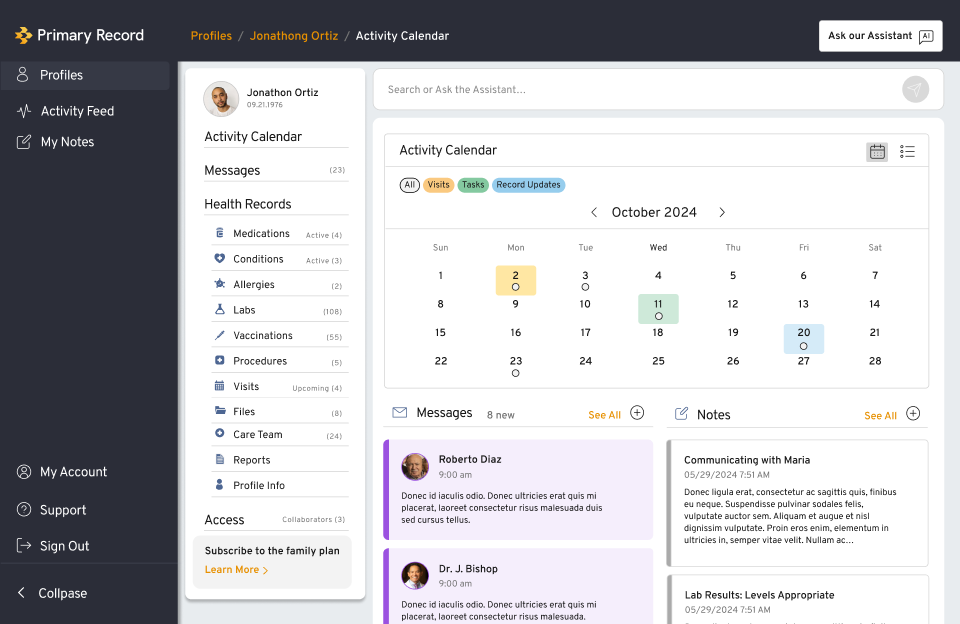
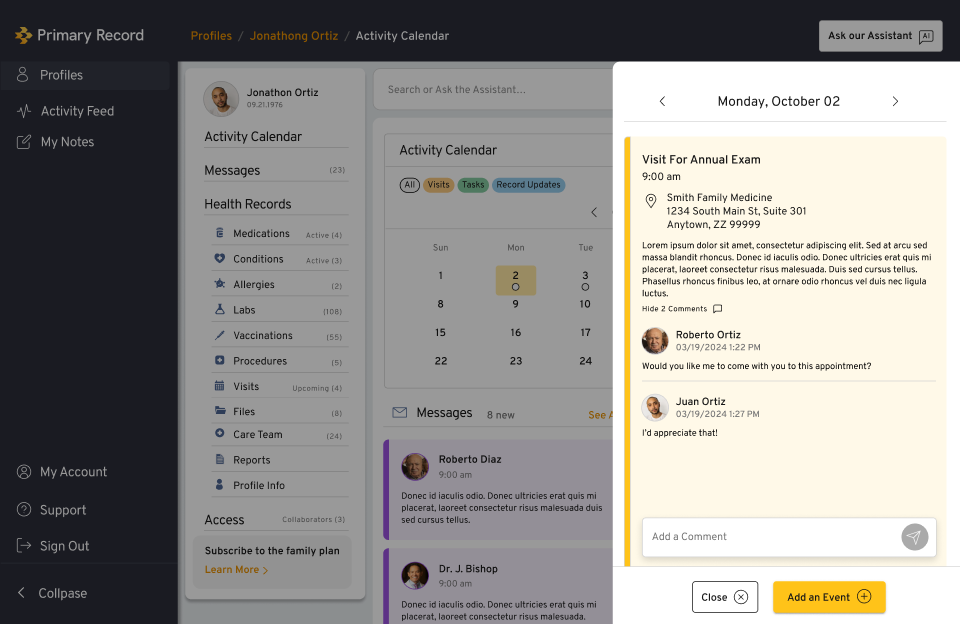
Key Capabilities Showcase
Centralized Client & Family Management
Gives care teams a single dashboard to view assigned families, track active care plans, and monitor updates across patient profiles in real time.
Flexible Admin & Permission Controls
Allows organizations to assign specific staff roles, manage view and edit rights across multi-member care teams, and ensure strict compliance with client privacy settings.
Onboarding & Invite Workflows
Simplifies how organizations invite caregivers and families into the platform, making the transition onto Primary Record seamless and low-friction.
Telling the Product Story
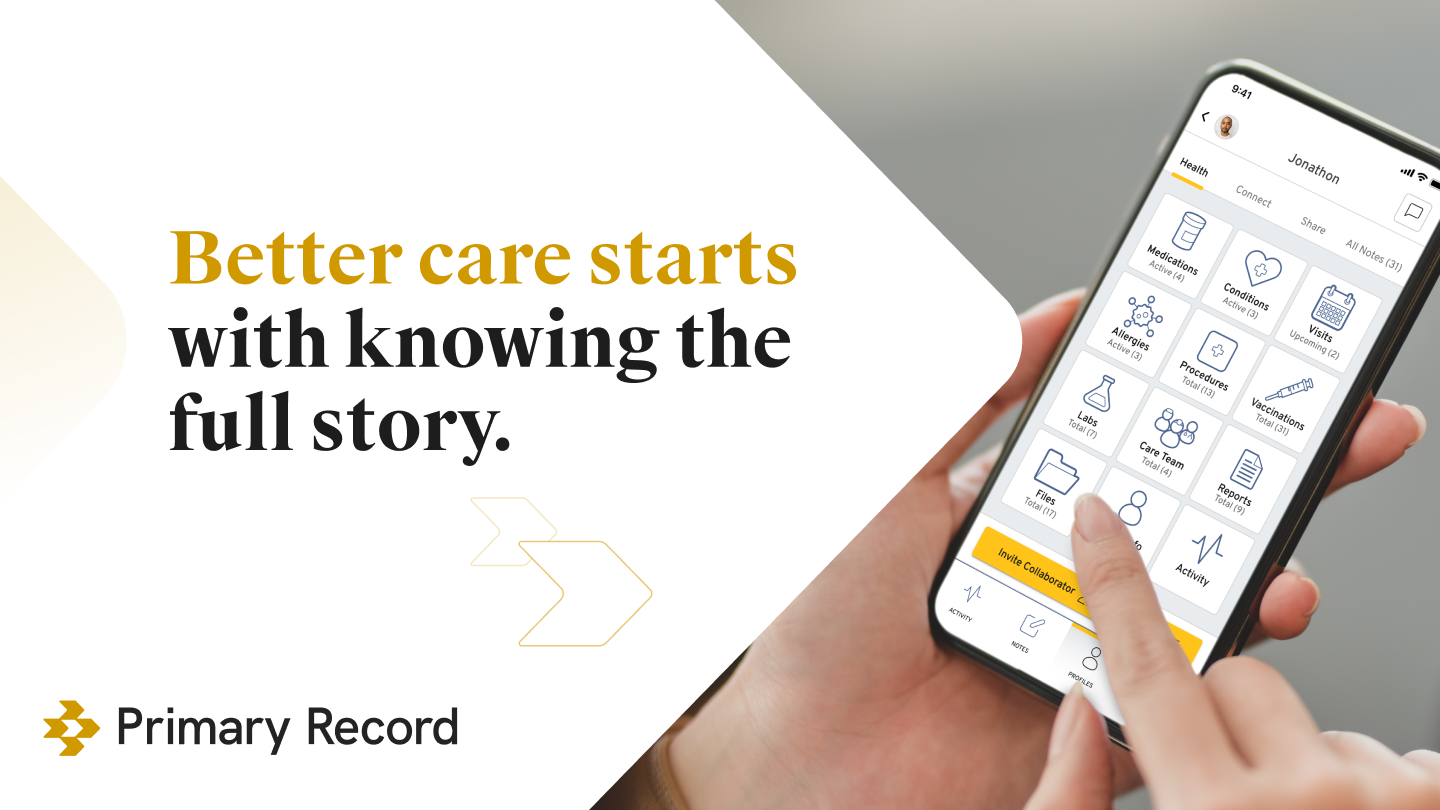
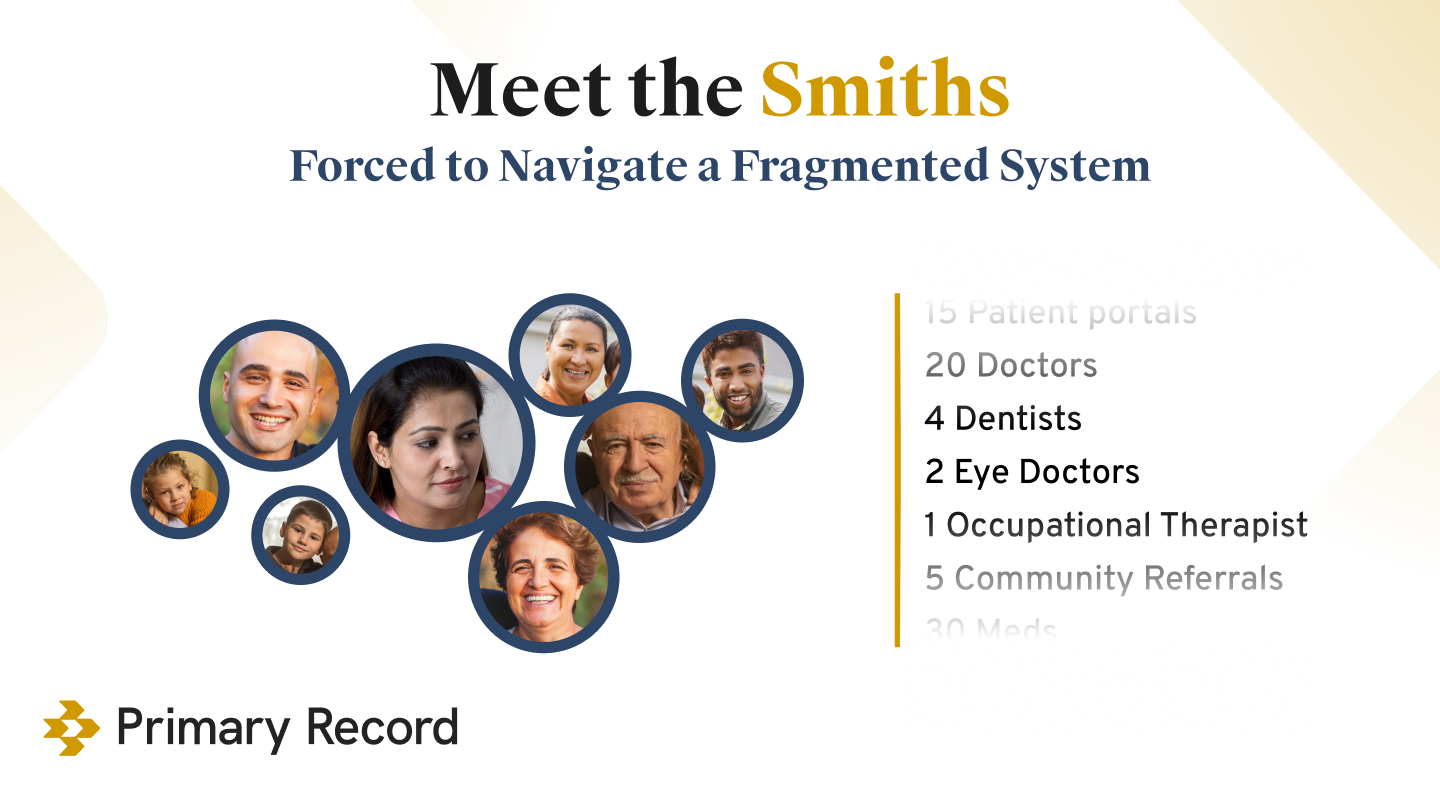
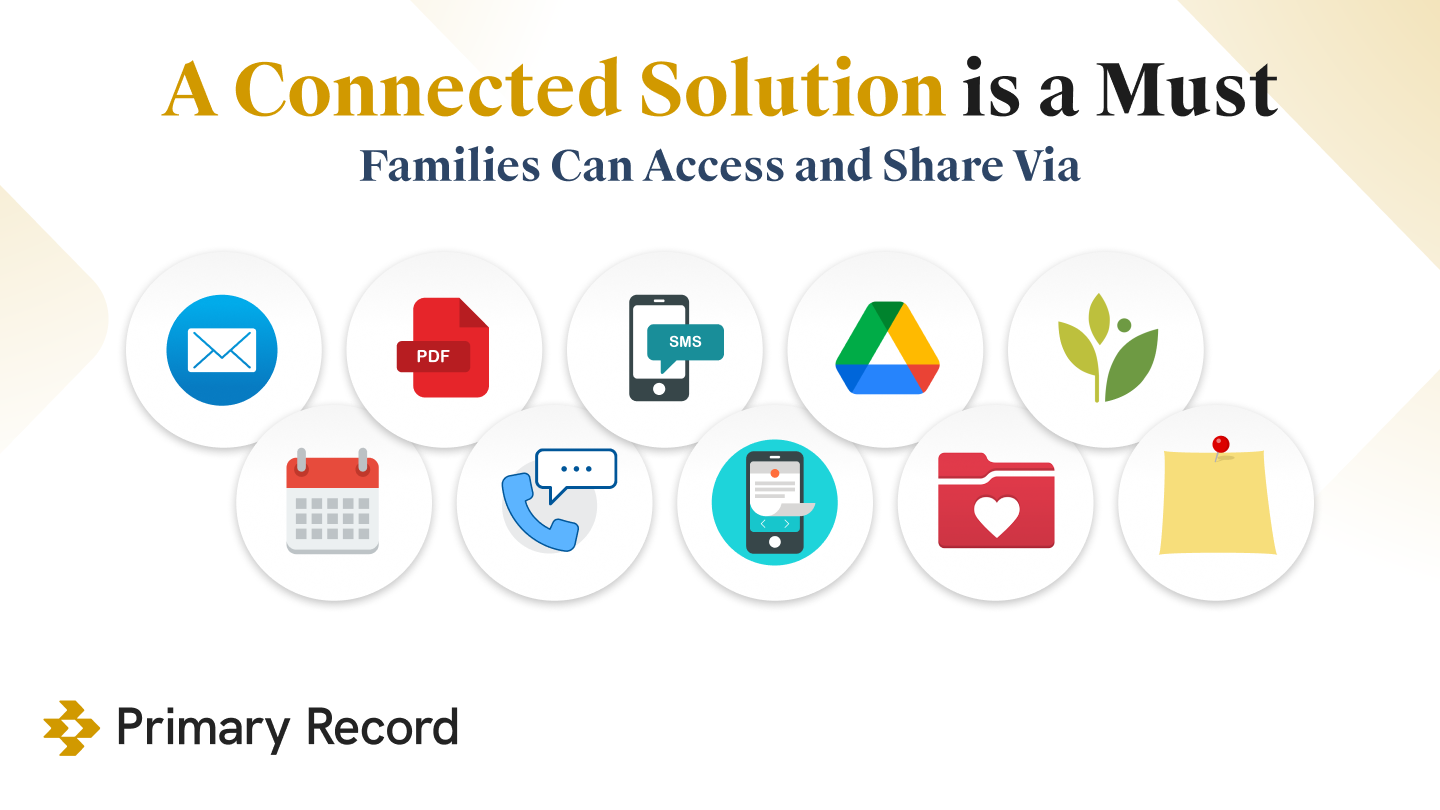
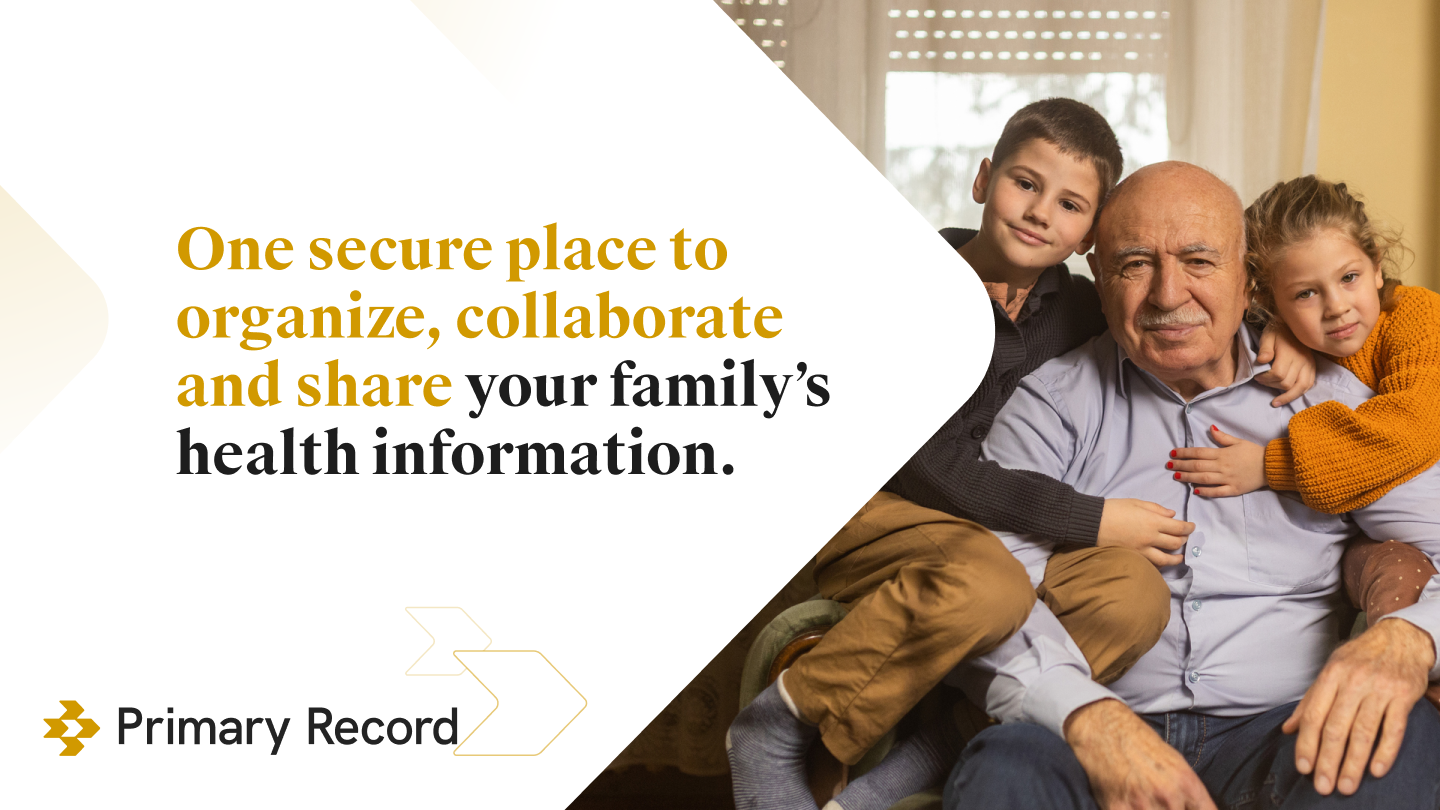
Designed high-impact visual presentation decks for investor pitches, strategic partnership meetings, and prospective enterprise clients. Translated complex product architecture, user research findings, and market positioning into clean, compelling visual narratives that built stakeholder confidence.